
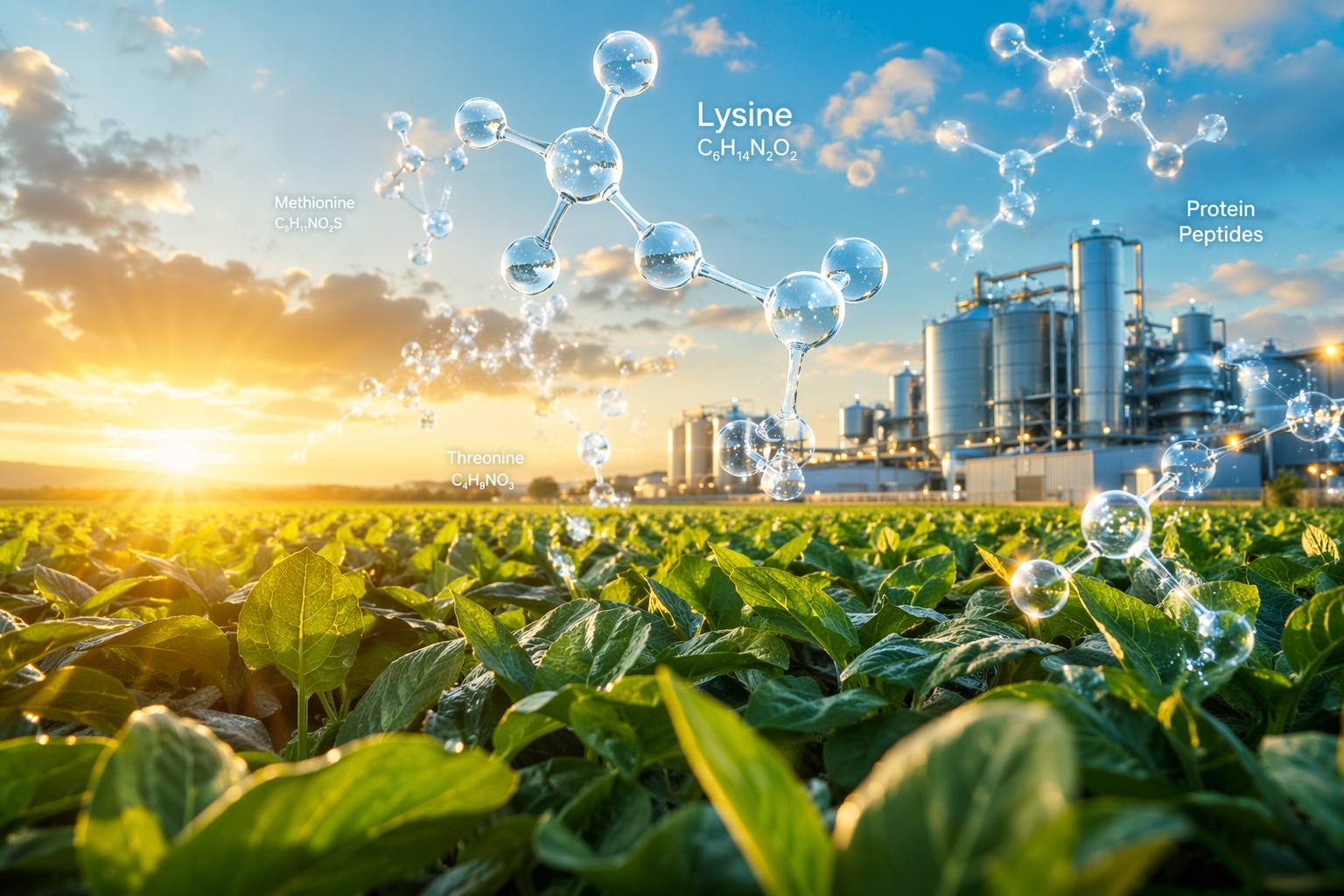
In the pursuit of sustainable and high-yield agriculture, the fertilizer industry is undergoing a paradigm shift. At the forefront of this transformation are Industrial Proteins, specifically in the form of Protein Hydrolysates (PHs). Once considered industrial by-products, these substances are now being repurposed as high-efficiency biostimulants that go far beyond basic crop nutrition.
What are Protein Hydrolysates?
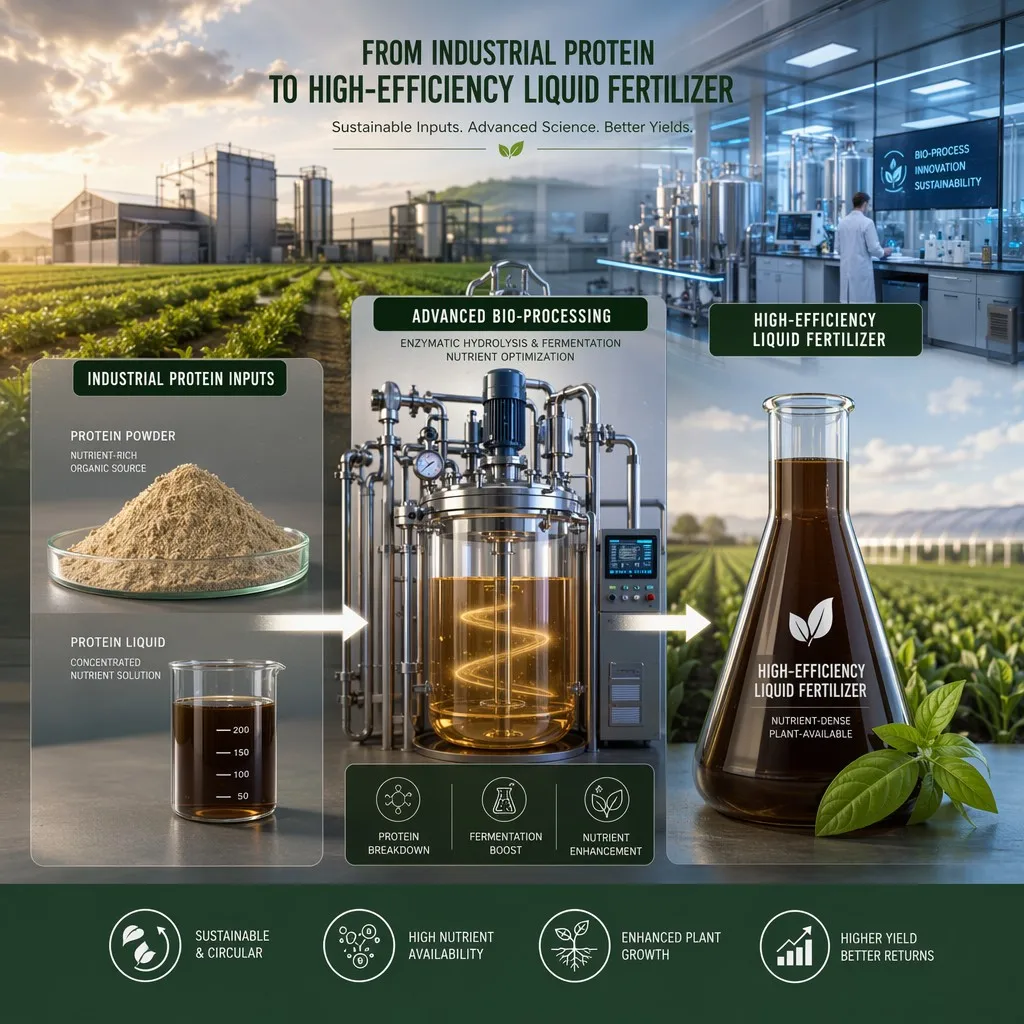
Protein hydrolysates are a mixture of peptides and amino acids obtained through the chemical or enzymatic hydrolysis of protein-rich raw materials. These sources range from animal by-products (collagen, feather meal, fish waste) to plant-based proteins (soy, corn). Unlike traditional NPK fertilizers, PHs function primarily as biostimulants, triggering physiological processes within the plant.
Key Benefits for Modern Crops
- Enhanced Nutrient Use Efficiency (NUE): PHs act as natural chelators. They bind with micronutrients like iron, zinc, and manganese, facilitating their transport into the plant’s vascular system. This reduces fertilizer waste and optimizes nutrient uptake.
- Abiotic Stress Tolerance: This is perhaps the most critical advantage. Industrial proteins help crops survive “environmental shocks” such as extreme heat, drought, and salinity by regulating the plant’s osmotic balance.
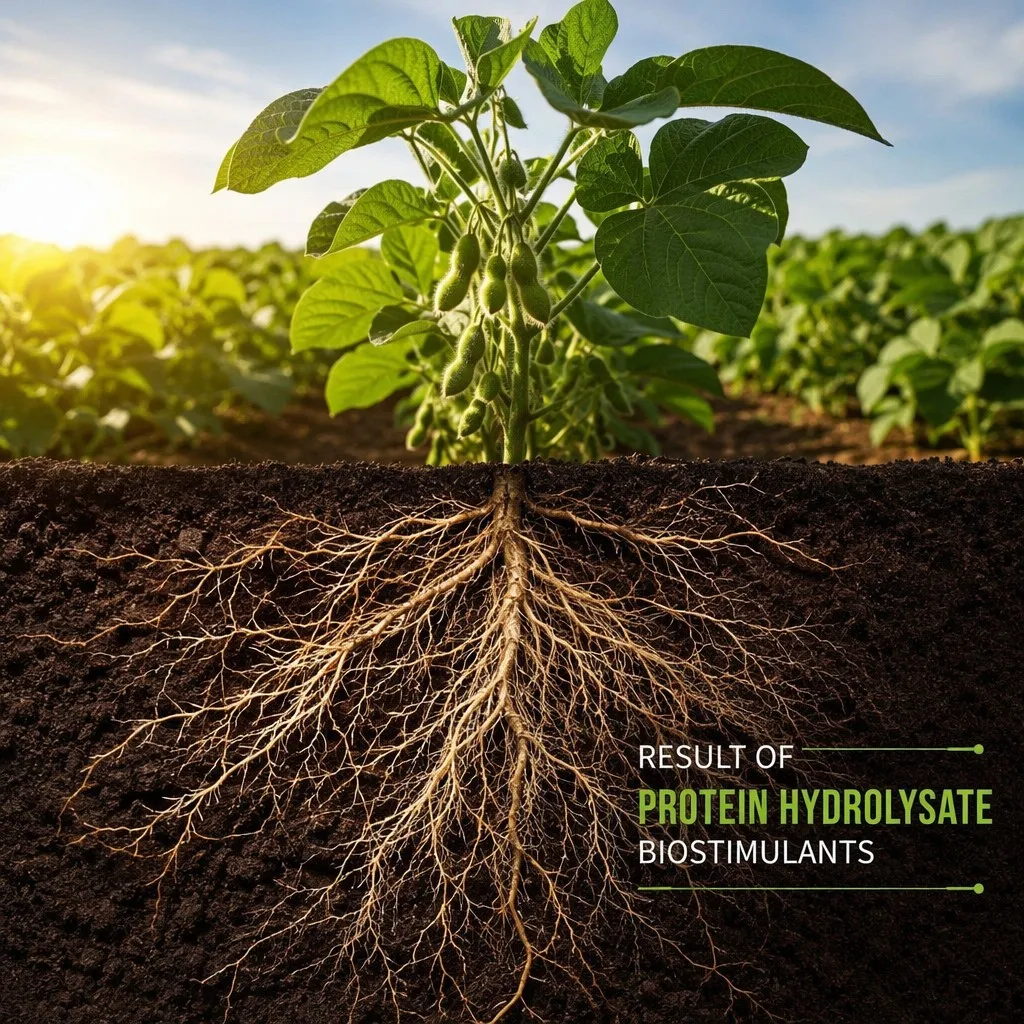
- Root System Architecture: PHs stimulate the production of lateral roots and increase root hair density. A more robust root system allows plants to explore a larger volume of soil for water and minerals.
- Soil Microbiome Activation: As a source of organic carbon and nitrogen, protein-based fertilizers feed beneficial soil microbes, improving soil structure over time.
A Step Toward the Circular Economy
The use of industrial proteins in agriculture is a textbook example of the Circular Economy. By converting bio-waste from the leather, fishery, and food processing industries into valuable agricultural inputs, we reduce environmental footprints and promote a zero-waste supply chain.
Conclusion
Industrial proteins are no longer just “waste.” They are the bioactive engines driving the next generation of agriculture. For growers looking to increase yield while reducing chemical dependency, protein-based biostimulants offer a scientifically proven, sustainable solution.