
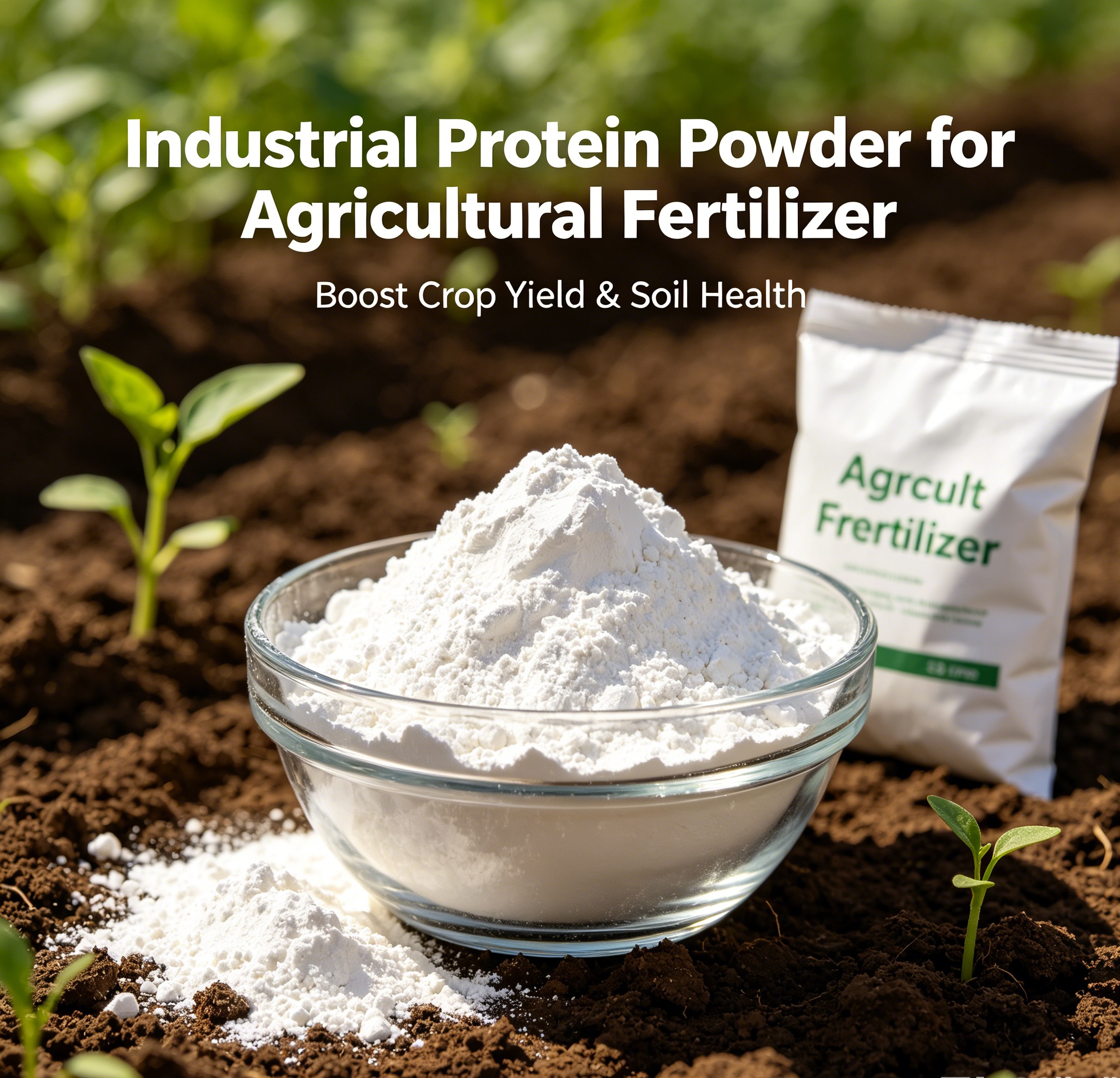
Industrial Protein for Fertilizer: Organic Nitrogen Applications
Main Applications of Industrial Protein
1. Organic Nitrogen Fertilizer
Industrial protein can supply organic nitrogen for fertilizer formulations. Its nitrogen concentration and hydrolysis characteristics influence the final product.
Manufacturers can combine protein-based nitrogen with other nutrient sources according to crop requirements and formulation targets.
2. Microbial Fertilizer
Microorganisms require suitable nitrogen and nutrient sources during cultivation. Soluble protein hydrolysates can provide peptides and amino compounds for selected fermentation systems.
As a result, Industrial Protein can serve as a potential raw material for microbial fertilizer production.
Before large-scale production, manufacturers should test microbial compatibility, dosage, pH, and solubility.
3. Biofertilizer
Biofertilizer products often combine beneficial microorganisms with nutrient components.
Protein hydrolysates can contribute organic nitrogen and soluble nutrients to selected formulations. However, results depend on the microorganism, formulation, soil conditions, and application method.
Small-scale trials can help manufacturers determine the appropriate grade and dosage.
4. Agricultural Nutrient Products
Protein-derived organic compounds can also support agricultural nutrient formulations.
Different hydrolysis levels create different peptide profiles. Manufacturers can therefore select a suitable Protein Hydrolysate according to solubility, nitrogen content, and intended application.
Key Benefits of Industrial Protein
Organic Nitrogen Source
Industrial protein provides a protein-based Organic Nitrogen Source for fertilizer production.
This characteristic makes it suitable for organic nitrogen fertilizers and selected agricultural nutrient formulations.
High Solubility Options
Hydrolyzed protein can offer good water solubility when manufacturers select the appropriate grade.
Good solubility supports liquid fertilizer, soluble fertilizer, and microbial fermentation applications.
Peptide and Amino Compound Content
Hydrolysis produces smaller peptides and amino compounds.
These components give fertilizer manufacturers additional flexibility when developing protein-based agricultural products.
Flexible Formulation
Manufacturers can adjust the application rate according to nitrogen concentration, solubility, hydrolysis level, and formulation requirements.
This flexibility allows Industrial Protein Powder to serve different fertilizer development strategies.
How to Select Industrial Protein for Fertilizer
The right raw material depends on the final application. Before purchasing, manufacturers should review several technical specifications.
- Total Nitrogen: Indicates the overall nitrogen content.
- Amino Nitrogen: Helps evaluate the hydrolyzed nitrogen fraction.
- Solubility: Important for liquid fertilizer and fermentation.
- Hydrolysis Level: Influences peptide distribution and product characteristics.
- Moisture: Affects storage and effective concentration.
- Ash: Helps evaluate mineral residue.
- Batch Consistency: Supports stable fertilizer production.
Laboratory testing can further confirm compatibility with the target formulation.
Industrial Protein for Microbial Fertilizer
Microbial fertilizer requires a suitable nutrient environment for microorganism cultivation.
A soluble Protein Hydrolysate can provide organic nitrogen and peptides during fermentation. However, different microbial strains may respond differently to the same nitrogen source.
For this reason, manufacturers should evaluate growth performance, dosage, solubility, and fermentation stability before commercial use.
Industrial Protein vs. Mineral Nitrogen
Industrial protein and mineral nitrogen provide nitrogen through different forms.
Mineral fertilizers generally supply inorganic nitrogen, while industrial protein contains nitrogen within organic compounds.
These materials can serve different roles within fertilizer formulations. Therefore, manufacturers may evaluate both sources when developing balanced nutrient products.