
Food Grade Gelatin Products: How to Read Specs and Choose Well
In this article
Food grade gelatin powder looks simple, yet its specification sheet carries the information that decides product success. Bloom strength, viscosity, mesh size, and purity limits all shape how the powder performs in your line. This guide explains each spec in plain language and shows buyers what to verify before ordering.
What the Product Is
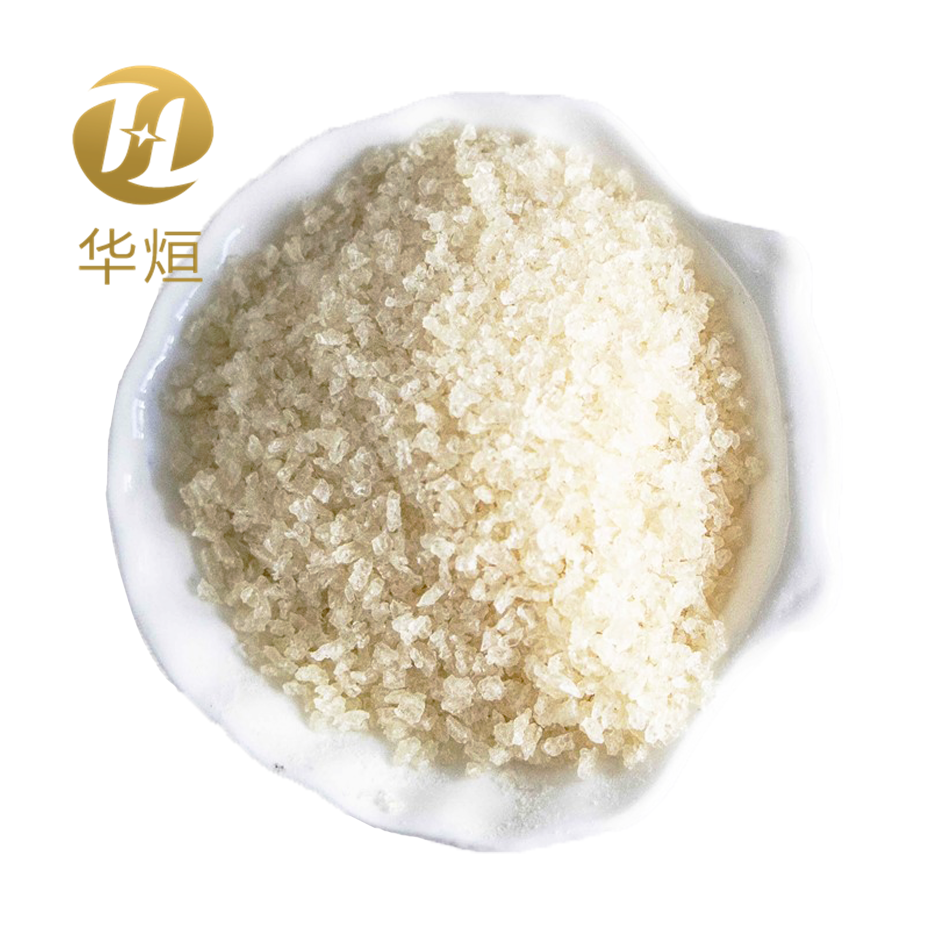
Food grade gelatin is a natural protein extracted from collagen found in hides and bones. Manufacturers hydrolyze collagen under controlled heat, then dry the result into a powder, granules, or leaf form. The product is odorless, tasteless, and pale yellow to cream white.
Its amino acid profile sets it apart. Glycine, proline, and hydroxyproline make up a large share, giving gelatin its water-binding and gel-forming power. Those properties turn into texture, stability, and clarity in finished food.
Buyers should treat gelatin as a technical ingredient, not a commodity. Small differences in Bloom or viscosity change how a gummy sets or a yogurt holds. Understanding the specs prevents costly trial-and-error later.
Forms and Source Types
Gelatin ships in several physical forms. Powder dominates industrial use because it dissolves fast and batches consistently. Granules and sheets suit specific confectionery and culinary applications where hydration control matters.
Source type shapes performance. Porcine gelatin offers high Bloom and clarity for candy and capsules. Bovine gelatin suits halal and kosher markets with strong gelling power. Fish gelatin dissolves at lower temperatures and appeals to clean-label buyers.
| Source | Process type | Typical advantage |
|---|---|---|
| Porcine | Type A (acid) | High Bloom, clarity, cost efficiency |
| Bovine | Type B (alkaline) | Halal/kosher fit, strong gel |
| Fish | Type A (acid) | Low melting point, religious fit |
Certification follows the source. Halal and kosher certificates require segregated lines and audited raw materials. Buyers serving Muslim-majority markets should confirm certification before sampling, since re-certification takes time.
Key Specifications Explained
Four numbers define most gelatin products. Bloom strength measures gel firmness, typically ranging 80 to 320. Higher Bloom creates firmer, quicker-setting gels for gummies and capsules, while lower Bloom suits soft desserts.
Viscosity describes how thick the warm solution runs. Food grades commonly sit between 1.0 and 5.5 mPa·s at 6.67% concentration. This value affects mouthfeel, coating behavior, and film formation in many applications.
Mesh size controls particle distribution, usually 8 to 60 mesh for powder. Finer powder hydrates faster; coarser granules delay hydration. Moisture and ash limits complete the picture, with moisture capped near 12% and ash around 2% for stable storage and clean taste.
Grades and Quality Standards
Gelatin products carry different grade labels. Food grade serves general food production. Pharmaceutical grade meets stricter purity and documentation rules for capsules. Nutritional supplement grade sits between, serving gummies and fortified foods.
Global standards define acceptable limits. Common references include GB/T 6783 in China, USP 222 for Bloom testing, plus EP and FCC specifications. Conformance to these standards appears on the certificate and signals market readiness.
Reading a Certificate of Analysis
The certificate of analysis (COA) is the buyer’s primary verification tool. It lists measured values for appearance, Bloom, viscosity, pH, protein, moisture, and ash. Matching these numbers to your requirement is step one.
Microbiological and heavy-metal results matter just as much. Food grade limits typically cap total plate count at 1,000 CFU/g, with lead, arsenic, and cadmium below 1 mg/kg. Sulfur dioxide residue should stay under 30–50 mg/kg.
Insist on a COA for every batch, not just the first sample. Batch-to-batch consistency protects your production line from surprise rework. A supplier who documents each lot earns trust faster than one who only promises quality.
Choosing a Supplier
Start by requesting samples that match your target application. Test hydration time, set behavior, and final gel texture under your own conditions. Laboratory numbers predict performance, but your line decides the real result.
Verify certifications and traceability before volume orders. GMP, ISO 22000, HACCP, and FSSC 22000 signal robust systems. Species origin and country of origin documentation support halal, kosher, and import compliance.
Suppliers such as Xiamen Huaxuan Gelatin provide gelatin powder and leaf gelatin for baking, capsule-grade gelatin, and halal beef gelatin with COA support. Compare a few vendors on documentation depth, not just price.
Quick Buyer Checklist
- Match Bloom to application — high for gummies, medium for desserts, low for soft sets.
- Confirm viscosity range — mouthfeel and film behavior depend on it.
- Check particle size — hydration speed follows mesh number.
- Verify purity limits — microbes, heavy metals, and SO₂ must meet target market rules.
- Request batch COAs — consistency beats one-time samples.
- Confirm certifications — halal, kosher, GMP, ISO as your market requires.