
From Factory Floor to Farm Field: How Industrial Protein Becomes Fertilizer
In this article
Every year, the food, aquaculture and rendering industries generate tens of millions of tonnes of protein-rich residues — fish guts, feather meal, dairy whey, oilseed cake, slaughterhouse offcuts. For decades these were low-value waste. Today, a growing slice of them is being re-routed into agriculture as protein hydrolysates: a class of fertilizer and plant biostimulant built from short peptides and free amino acids. This post walks through how that transformation actually happens, from raw by-product to a product a farmer can spray on a leaf.
1. What “industrial protein” means here
In this context, industrial protein is not the protein in a consumer product. It is protein recovered from industrial and agricultural by-products, then broken down into small, soluble fragments. The finished material — a protein hydrolysate — is a mixture of:
- Free amino acids (the individual building blocks),
- Short peptides (chains of 2–20 amino acids), and
- Depending on the route, small amounts of minerals, lipids and bioactive compounds.
Plants absorb these fragments directly through roots and leaves. Beyond simply supplying nitrogen, the peptides act as biostimulants — they trigger metabolic, hormonal and stress-tolerance responses in the crop. That dual role (nutrient + signal) is what makes protein hydrolysates distinct from conventional urea or ammonium nitrate.
“Protein hydrolysates are an important group of plant biostimulants… a mixture of oligopeptides, polypeptides and amino acids that can be applied as foliar sprays or dosed into the soil near the plant’s roots.” — Review on fish by-product biostimulants (Molecules, 2020)
2. Where the protein comes from
The feedstock determines both the amino-acid profile and the economics. The major industrial sources are:
| Source | Typical feedstock | Notes |
|---|---|---|
| Marine / fish | Heads, viscera, skin, bones from processing | 8–35% protein depending on tissue; well-established route (50+ yrs of use) |
| Rendering / animal | Feather meal, blood meal, collagen/gelatin, slaughterhouse offcuts | High protein; risk of imbalanced amino acids and racemisation if over-processed |
| Plant | Soybean / rapeseed / sunflower cake, legume residues | Balanced, clean; increasingly preferred for “vegan” biostimulant positioning |
| Dairy | Cheese whey (the most abundant dairy by-product) | Largely lactose + some whey protein; often fermented before use |
| Insect & microbial | Black soldier fly (BSF) frass, single-cell protein from fermented residues | Fast-growing; couples waste valorisation with protein production |
Globally, agricultural and food processing waste totals on the order of 100 million tonnes per year, and valorising it via hydrolysis cuts greenhouse-gas emissions while recovering organic nitrogen, phosphorus and micronutrients. Projects such as the EU ONE EARTH programme explicitly map chicken feathers, fish bones and cheese whey into fertilizer-grade protein streams.
3. The conversion process, step by step
Regardless of feedstock, the journey follows a common outline: collect and pre-treat the protein, break it apart (hydrolysis), clean it, concentrate it, then formulate it. The details of the middle step are what separate a good product from a toxic one.
1 Collection & pre-treatment
Raw by-products are collected, sorted and ground. Fish or animal residues are often solubilised in water at roughly a 1:1 ratio to make them pumpable. Pathogen control and stabilisation begin here.
2 Hydrolysis — breaking the peptide bonds
This is the heart of the process. Four routes are used, alone or in combination:
Chemical (acid/alkali)
Enzymatic (proteases)
Thermal
Microbial / fermentation
- Chemical hydrolysis uses strong acid or alkali. It is cheap and yields high free-amino-acid content, but it can destroy sensitive amino acids (e.g. tryptophan under acid) and cause racemisation — flipping L-amino acids to the D-form, which is a leading cause of phytotoxicity in animal-based hydrolysates.
- Thermal hydrolysis uses hot liquid water. It is gentle on nutrition but denatures most functional peptides above ~60 °C, leaving fewer stable bioactive peptides.
- Enzymatic hydrolysis uses proteases (e.g. Alcalase) at mild temperature and pH. It avoids racemisation and gives a consistent, high-quality product — the gold standard for premium biostimulants. A typical run: 55 °C, pH 6.5, 3 hours.
- Microbial hydrolysis ferments the protein with selected cultures (e.g. lactic acid bacteria) over days. It is slower but adds metabolic versatility and extra bioactives.
3 Purification & separation
The hydrolysed mix is centrifuged and filtered to remove insoluble solids and fat. Fish hydrolysates, for example, must drop oil to below ~0.5% to avoid oxidation in storage. Membrane filtration (micro-, ultra-, nano-) then fractions the peptides by size, isolating the most bioactive ranges.
4 Concentration & drying
The liquid is concentrated (up to ~50% solids) by evaporation, then dried. Spray-drying and freeze-drying dominate for high-value powders; roller-drum drying is a lower-cost alternative. The result is a stable, shippable powder or a liquid concentrate.
5 Formulation & quality control
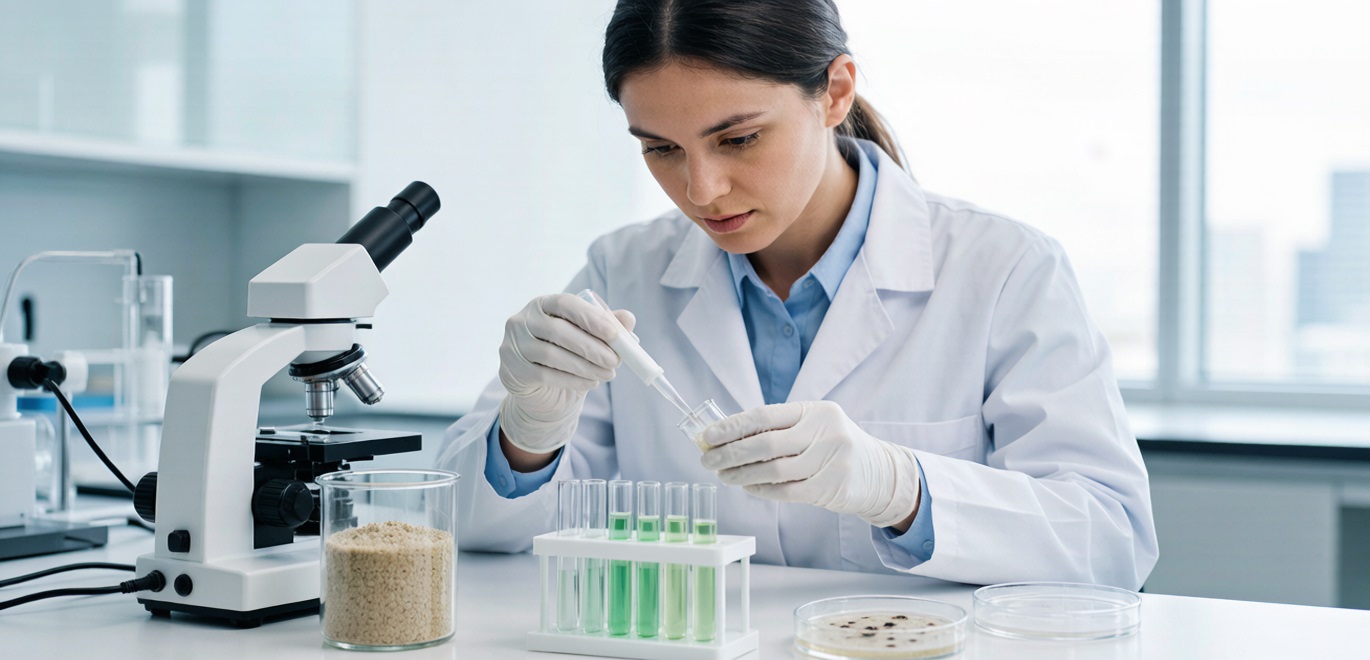
The hydrolysate is blended with carriers, stabilisers or other nutrients and tested for amino-acid profile, nitrogen content, microbial load and heavy metals. It is then packaged and stored cool and dry before distribution.
4. How it is applied to crops
The finished product reaches the field in three main ways:
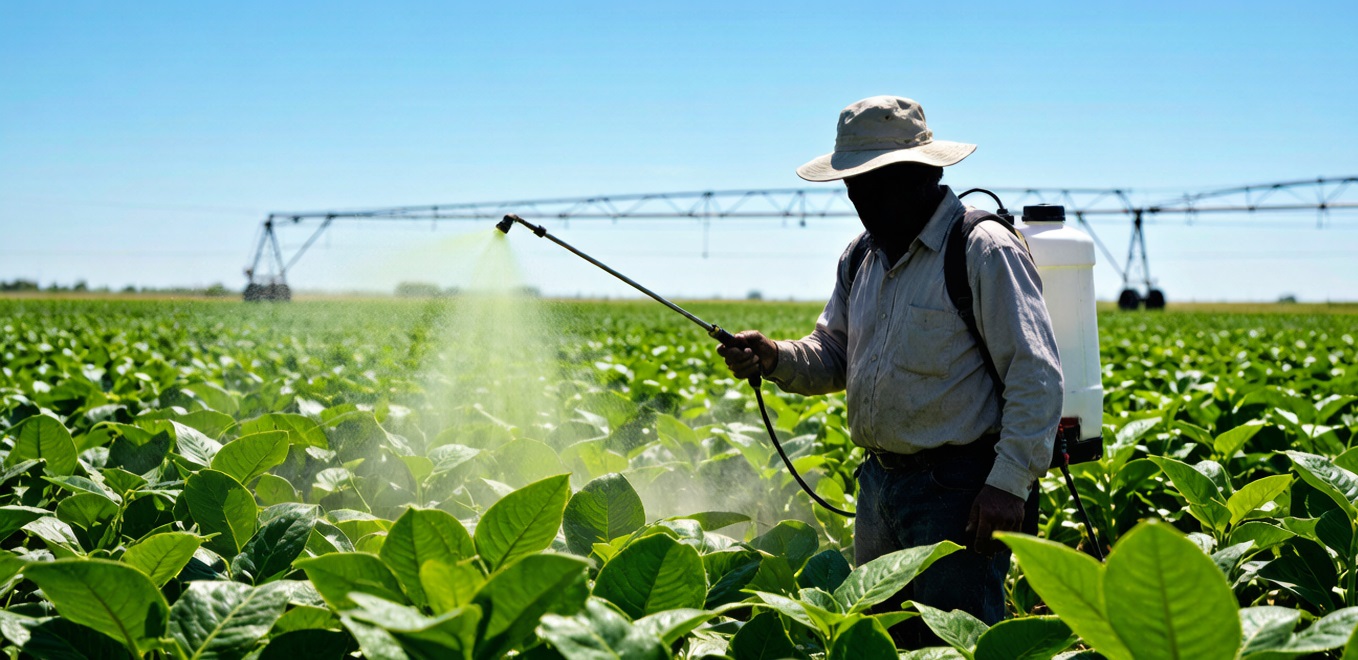
- Foliar spray — the dominant mode for biostimulant-grade hydrolysates. Leaves absorb amino acids and peptides quickly, giving a fast response to stress.
- Soil / root-zone drench — supplies organic nitrogen and feeds soil microbes, which use the peptides as an easy carbon and nitrogen source.
- Blended fertilizers — mixed into granular or liquid NPK formulations, or combined with microbial inoculants for a compounded effect.
Application is usually at low rates — many hydrolysates are effective in small doses, and over-application of animal-derived types can backfire due to residual phytotoxicity. Commercial products (e.g. Ilsa’s Fertileader, Bioibérica’s Terra-Sorb) are marketed for grapes, tomatoes, cereals and leafy vegetables.
5. Why it works — the benefits
Direct, bioavailable nitrogen
Amino-acid nitrogen is taken up directly, reducing reliance on synthetic mineral N and the associated risks of leaching and eutrophication.
Biostimulation
Peptides act through hormone-like signaling, antioxidant defense (e.g. boosting SOD activity), osmotic adjustment (proline accumulation) and gene-expression changes — improving drought, salt and temperature tolerance.
Soil health
Hydrolysates feed the soil microbiome and can chelate micronutrients such as iron, making them more available to plants.
Circular economy
Recovering protein from waste closes nutrient loops, diverts organic waste from landfill and lowers the carbon footprint of both the waste and the fertilizer streams.
6. Challenges and limitations
- Batch consistency — amino-acid profiles vary with feedstock and process, so product performance can drift between lots.
- Regulation — biostimulant and fertilizer classifications differ by region (EU vs. US frameworks), affecting what can be claimed and sold.
- Contaminants — animal-derived streams must be screened for heavy metals and pathogens; insect and rendering routes need careful monitoring for accumulation.
- Cost & scale — enzymatic and freeze-drying routes are more expensive than chemical hydrolysis, pressuring margins at industrial scale.
7. Where the field is heading
The trajectory is clear: more enzymatic + microbial combinations, tighter membrane-based fractionation to isolate specific bioactive peptides, and integration with insect and single-cell protein platforms that produce the feedstock and the fertilizer in one loop. Expect to see hydrolysates increasingly paired with microbial inoculants, and more “waste-to-wonder” products that carry an explicit circular-economy story on the label.
For farmers, the appeal is concrete: a product that feeds the crop and the soil, sourced from material that used to be a disposal problem. For industry, it is a rare win-win — turning a cost centre (waste) into a revenue line (input). The process is mature enough to trust and young enough to improve, which is exactly the kind of space worth watching.