
Impact of Professional Peptone on Organic Liquid Fertilizer Formulas
In a fertile valley where sustainable agriculture is more than a slogan, a commercial tomato grower noticed a recurring issue: despite using standard organic fertilizers, the crop’s nutrient uptake remained sluggish during the peak vegetative phase. Traditional organic inputs often rely on slow decomposition, a process that can lag behind the rapid metabolic demands of high-value crops. To bridge this gap, modern agronomists are increasingly looking toward refined biological inputs.
This shift has spotlighted the specific Impact of Professional Peptone on Organic Liquid Fertilizer Formulas, transforming how manufacturers approach plant-available nitrogen. As a result, the role of a Professional Peptone Supplier has evolved from a simple commodity provider to a technical partner in biostimulant innovation. These suppliers, particularly those rooted in specialized protein extraction like China-based Xiamen Huaxuan Gelatin Co., Ltd. (HUAXUAN), have spent decades refining the enzymatic hydrolysis processes necessary to convert complex animal proteins into highly soluble, bioactive peptides that serve as the backbone of modern liquid fertigation.
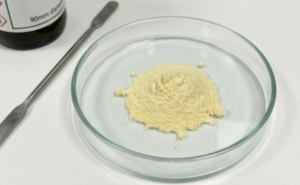
The Functional Core: Identifying Peptone as an Active Nitrogen Source
In the landscape of organic liquid fertilizer, nitrogen is often the most challenging element to stabilize in a soluble, non-synthetic form. Industrial-grade peptone represents a significant departure from bulk organic fillers. Rather than acting as a simple carrier, it functions as a “living” nitrogen source. Derived from high-quality bovine or porcine collagen sources, this material undergoes controlled breakdown to yield a high concentration of organic nitrogen and small-molecule active peptides.
When integrated into liquid formulas, this protein derivative provides a density of nutrition that raw organic matter cannot match. Because it is a product of the gelatin and collagen industry, its purity is maintained through international standards. Facilities like those operated by HUAXUAN utilize automated production lines and online sterilization systems to ensure that the peptone remains free of pathogens while retaining a protein content often exceeding 90%. This level of refinement allows the professional peptone on organic liquid fertilizer formulas to remain stable in concentrated liquid states without the risk of fermentation or spoilage before application.
Mechanism of Action: Enhancing Absorption and Soil Vitality
The effectiveness of a liquid fertilizer is measured by how quickly its nutrients move from the soil solution into the plant’s vascular system. The impact of professional peptone on organic liquid fertilizer formulas is most visible at the cellular level. Because peptones are rich in 18 essential amino acids—such as glycine, proline, and hydroxyproline—they act as ready-made building blocks. Instead of the plant spending energy to convert inorganic nitrates into amino acids, it can absorb these small-molecule peptides directly through the roots.
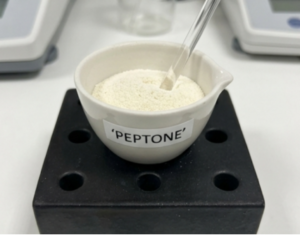
Beyond direct nutrition, these peptones serve a secondary, mid-level ecological function. They act as a high-energy carbon and nitrogen source for indigenous soil microbes. When a liquid fertilizer containing professional peptone is applied, it triggers a “priming effect,” stimulating the proliferation of beneficial bacteria and fungi. These microorganisms, in turn, help solubilize bound minerals in the soil, such as phosphorus and potassium, making the overall fertilizer formula more efficient. This dual-action—feeding both the plant and the soil microbiome—is why many manufacturers now seek out a reputable professional peptone supplier in China to secure a consistent supply of these bioactive precursors.
Production Value: Formula Stability and Technical Integration
From a manufacturing perspective, the physical characteristics of an ingredient are just as important as its chemical profile. Organic liquid fertilizers often face issues with sedimentation, clogging of fertigation lines, and batch-to-batch inconsistency. The use of professional peptone on organic liquid fertilizer formulas helps mitigate these mechanical risks. High-quality peptone is characterized by its excellent water solubility; it produces a clear or slightly amber solution that does not leave grit or insoluble fibers that could damage high-tech drip irrigation systems.
Consistency is driven by the infrastructure of the supplier. For instance, production environments that utilize dust-free workshops and closed pipeline systems ensure that the final powder or liquid hydrolysate meets strict particulate standards. Furthermore, by integrating the production of collagen, gelatin, and peptone within a single 20,000 square meter facility, a manufacturer can control the molecular weight distribution of the peptides. This vertical integration means the professional peptone supplier can provide a product that is not only cost-effective due to economies of scale but also technically tailored to remain stable across a wide pH range, which is critical for shelf-stable liquid fertilizer blends.
Bridging Theory and Practice: Supply Chain Reliability
The transition from a laboratory-proven formula to a commercially successful fertilizer product requires a supply chain capable of high-volume consistency. In the B2B sector, specialized manufacturers have built their reputations on long-term reliability. Some have maintained international partnerships for nearly 20 years, backed by certifications such as ISO 22000 and HACCP. This history provides a level of trust that is essential when a fertilizer brand is scaling its production.
Industrial-grade peptone is currently being deployed across diverse scenarios, from greenhouse hydroponics to large-scale organic grain production. To support these varied needs, a professional peptone supplier often offers flexible logistics, providing annual capacities reaching thousands of tons and customizable packaging options, such as 20kg or 25kg moisture-proof bags. This ensures that the professional peptone on organic liquid fertilizer formulas arrives at the mixing plant in peak condition, ready to be incorporated into the next generation of biostimulants.
Ultimately, the refinement of organic liquid fertilizer depends on the quality of its inputs. By utilizing professional-grade protein hydrolysates, formulators can move beyond traditional limitations, creating products that offer the precision of synthetic fertilizers with the ecological benefits of organic farming.
For more information on high-purity protein sources and industrial applications, please visit: https://hx-gelatin.com/.